
Upright pianos only, and why grands go to a specialist
The service covers upright pianos: the tall, flat-backed kind that stands against a wall, from a compact modern model to an older full-height one. Every upright is booked ahead with notice, because the route has to be looked at properly before anyone puts a hand on the case.
Grand and baby grand pianos are not moved at all. A grand has to have its legs and lyre taken off and travel on its side, which is specialist work with specialist kit, so a grand is not taken on and the honest answer is a dedicated piano mover. If you are not sure which you have, a photo settles it: an upright has its strings running up and down inside a tall cabinet, and a grand has a long, curved lid that opens like a wing.
A digital piano is a different job again: it is far lighter than an upright and travels like any other piece of furniture, unplugged and with its pedal unit secured.
What an upright piano weighs, and why the route matters more
An upright is heavier than most people expect. Kawai's own specification pages give 193kg for the K-15E, which stands 110cm high, 227kg for the 122cm K-300 and 238kg for the 130cm K-500. Older Victorian and Edwardian uprights vary from maker to maker, so the make and model, usually printed on the fallboard over the keys or cast into the iron frame inside, is the quickest way to pin down the weight of yours.
Weight is only half of it. The UK's Pianoforte Tuners' Association warns that an upright can be dangerously unbalanced and tip over easily, because the heavy iron frame puts its centre of gravity near the back, and that the small castors under many uprights were never designed for wheeling it across a room. So an upright goes on a trolley, strapped down, and is never rolled on its own castors.
That is why stairs, turns and doorways decide the job far more than distance does. A flat run from a ground-floor front room to a van parked outside is one kind of move. Three stone steps up from the pavement, a hall that turns sharply into the front room, or a flight of stairs inside the house is another, and the plan for each of those has to be settled at the quote. Bradford has plenty of both: many of its back-to-backs remain, with one front door and no way in from the rear, and on steep terraced streets the van may stop a short carry from the step.
Measuring the upright and the route before you ask for a quote
Ten minutes with a tape measure saves a wasted morning. These are the numbers that decide whether an upright piano goes through, and how:
| Measure this | Why it matters |
|---|---|
| Height, width and depth of the upright | Depth against door openings, height against the turn on the stairs |
| Clear opening of every doorway on the route | The opening with the door open is narrower than the door itself |
| The tightest turn, usually hall into front room | An upright has to swing round it without tipping |
| Number of steps outside, and their depth | Each step is a separate lift on a heavy, top-heavy load |
| Stairs inside, floor by floor, at both ends | A flight inside the house changes the whole plan |
Send those with photos of the upright from the front and the side, the front step, the hall and any stairs, plus both postcodes and where a van can stop. If the route needs specialist stair equipment, the quote says so and points you to a specialist piano mover rather than turning up to try the upright on the day.
If the floor along the route is new laminate, polished boards or a pale carpet, mention those delicate floors at the quote.
Keys, pedals and getting the upright ready
Before the day, clear everything off the top and out of the stool. If the fallboard over the keys locks, lock it and keep the key somewhere you will find it at the other end, as a lost fallboard key is a common nuisance after a move. Close the top lid too.
The keyboard, the pedals, the lid and the front legs on some older models are not handholds, and nothing is lifted by them. The pedals and the rods behind them sit low at the front of the case, so the upright is tilted back, never forward, to get the trolley under it. Candle sconces or a loose music desk on an older upright come off and travel wrapped separately.
How an upright travels in the van
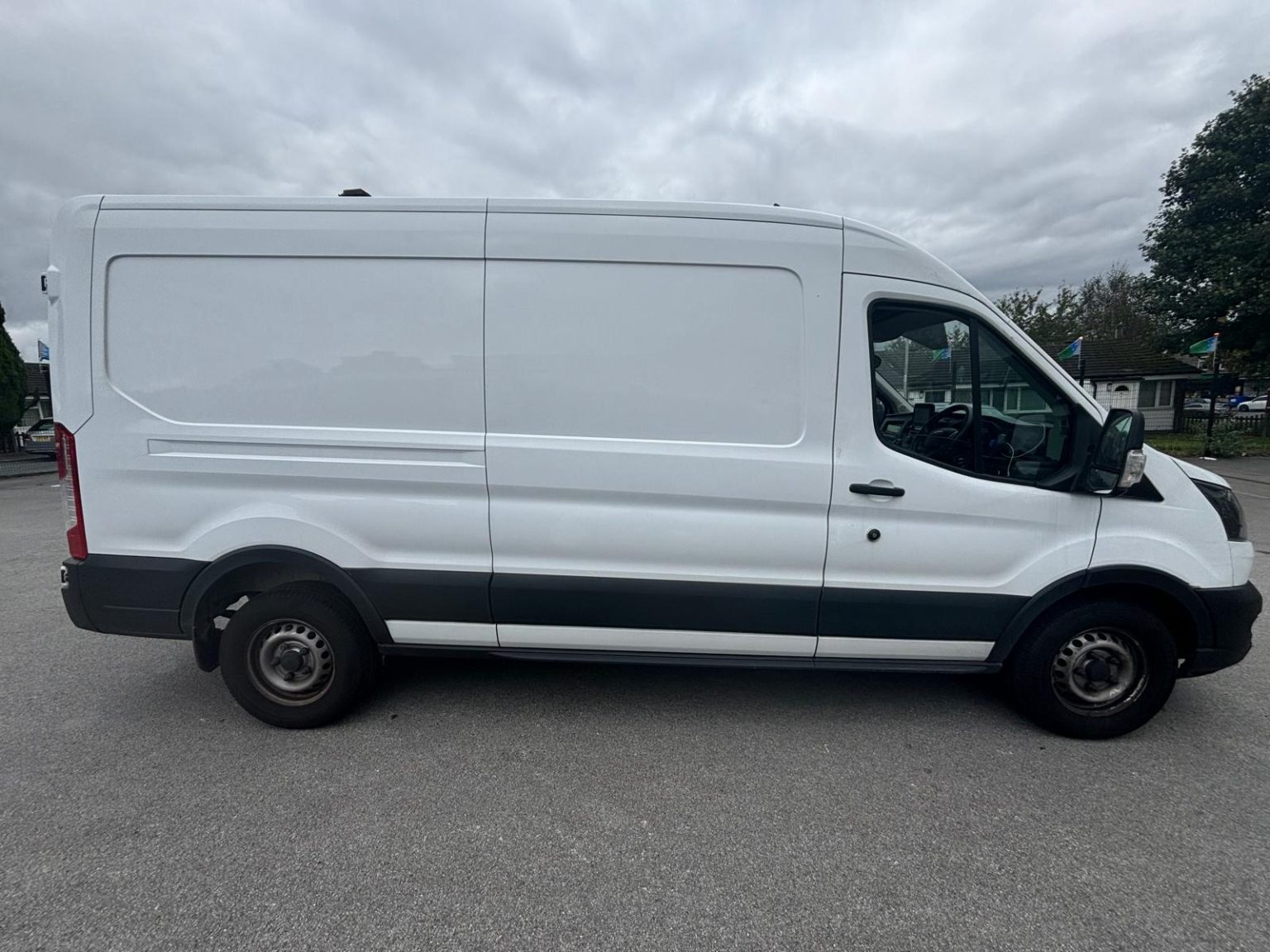
On the van the upright is wrapped in moving blankets and strapped to the tie-down points so it cannot rock or slide. It travels standing up, against the bulkhead behind the cab, never laid on its back, and nothing heavy is leant against it. The Ford Transit LWB has 1.7m of load height, so even a tall 130cm upright stands with room to spare.
Within Bradford the run itself is short, and the time goes on the carries at either end. For a move across West Yorkshire or further, the same method applies for the whole journey, and long runs anywhere in mainland Great Britain are booked by arrangement with one fixed price that includes fuel and tolls. Goods in transit cover is £10,000; if your upright is worth more than that, check what your home insurance covers before the day.
An upright on its own, or as part of a house move
On its own, an upright is a single-item move: one collection, one drop, one fixed price. That suits an upright bought second-hand, one passed down in the family, or one going from a parent's house to a new home across Bradford or over to Leeds or Halifax.
As part of a house removal, tell us about the upright when you ask for the quote, not on the day. It changes how the van is loaded, since the upright goes in early against the bulkhead and comes off when its room is ready, and it may change how long the day runs. Moving furniture without the piano? A single piece is covered by furniture delivery, and runs over a long distance by long distance removals.
After the move: let the upright settle before it is tuned
Put the upright straight into its final spot, against an inside wall if you can, and away from radiators, outside doors and strong sun, because changes in temperature and humidity make the wood and felt move. Then leave it to settle before booking a tuner.
There is no fixed rule, but piano technician Alexander Peppe recommends waiting at least two weeks after a move between homes, and says most of the change in pitch comes from the new room's humidity rather than the journey. Tuning is not part of the move, so book your own tuner once the upright has had time to adjust.
Piano Removals across West Yorkshire and beyond
From Bradford the van runs to 8 towns, nearest first in West Yorkshire, then the longer runs north, south and over the Pennines. Each one has its own page covering the streets, access and parking there.
West Yorkshire
North Yorkshire
South Yorkshire
Greater Manchester
Lancashire
Merseyside
Frequently asked questions: Piano Removals
Do you move grand pianos?
No. Grand and baby grand pianos are not moved, because a grand has its legs taken off and travels on its side, which is a job for a specialist piano mover with the right kit.
How much notice do you need for an upright piano?
Every upright is booked ahead with notice rather than fitted in at short notice. Send the photos and measurements as early as you can, so the route is planned and the fixed price agreed well before the date you need.
How many people does it take to move an upright piano?
The handling and equipment for your upright are set out at the quote, from the photos and the route: its make and model or measurements, and the steps, turns and floors at both ends.
Can you move an upright piano up or down stairs?
A step or two at the front door is planned from your photos and the upright's height and depth. A full flight of stairs inside the house usually needs specialist stair equipment, and the quote says so plainly and points you to specialist piano movers when the upright cannot go that way without it.
Will my upright piano need tuning after the move?
Usually, yes. Let the upright settle in its new room for at least two weeks before a tuner sees it, as the change of humidity shifts the pitch more than the journey does. Tuning is not included, so book your own tuner.
Can you take the old upright piano we are replacing?
No. Nothing is taken for disposal, so an old upright can only be moved to another address you name, such as a relative's house.
Do you move upright pianos outside Bradford?
Yes. An upright can go anywhere in mainland Great Britain by arrangement, with one fixed price agreed first that covers the drive, fuel and tolls. Very long runs may take one or two days, settled at the quote.